

CALDERA PLATFORM: An integrated platform for infrared thermography in extreme environments
Fusion reactors such as WEST (CEA Cadarache) and ITER operate under extreme conditions, where the walls facing the plasma are subjected to intense heat fluxes (10 to 20 MW/m²). Real-time monitoring of these walls is crucial for both operational safety (preventing damage) and scientific progress (understanding plasma-wall interactions: erosion, deposition, and material aging).
Infrared thermography, capable of non-invasively measuring temperatures ranging from 100 to 3,600 °C, is a key diagnostic tool for this monitoring. However, its use in harsh environments remains challenging due to system design and maintenance constraints, as well as the difficulty of analyzing thermal scenes (dynamic surface changes, intense heat fluxes, and multiple parasitic reflections).
To address these challenges, the IRFM has established the CALDERA platform (Design, Calibration, and Development of Advanced Infrared Systems), a unique infrastructure dedicated to the design and calibration of high-performance infrared systems, the intelligent processing of thermal data (via AI and digital twins), and the experimental characterization of materials under controlled conditions.
CALDERA (Design, Calibration, and Development of Advanced Infrared Systems) is a unique technological platform dedicated to next-generation infrared systems and the intelligent use of thermal data (via AI and digital twins).
By combining advanced experimentation and modeling, CALDERA offers an integrated approach to the measurement chain, ensuring well-controlled systems and reliable measurements in extreme environments.
CALDERA is structured around four main areas:
- Design and calibration ofinnovative infrared systems in extreme environments
- Real-time automatic detection ofcritical thermal events via infrared imaging, enabling, for example, the regulation of power fed into the machine
- Intelligent correction of thermal measurements using AI-enhanced digital twins capable of inverting data to correct artifacts (variations in emissivity, parasitic reflections), thereby improving the accuracy of temperature diagnostics
- Material characterization and experimental validation under controlled conditions through the development of dedicated test benches that enable precise measurement of thermo-radiative properties and cross-validation of data processing and simulation processes
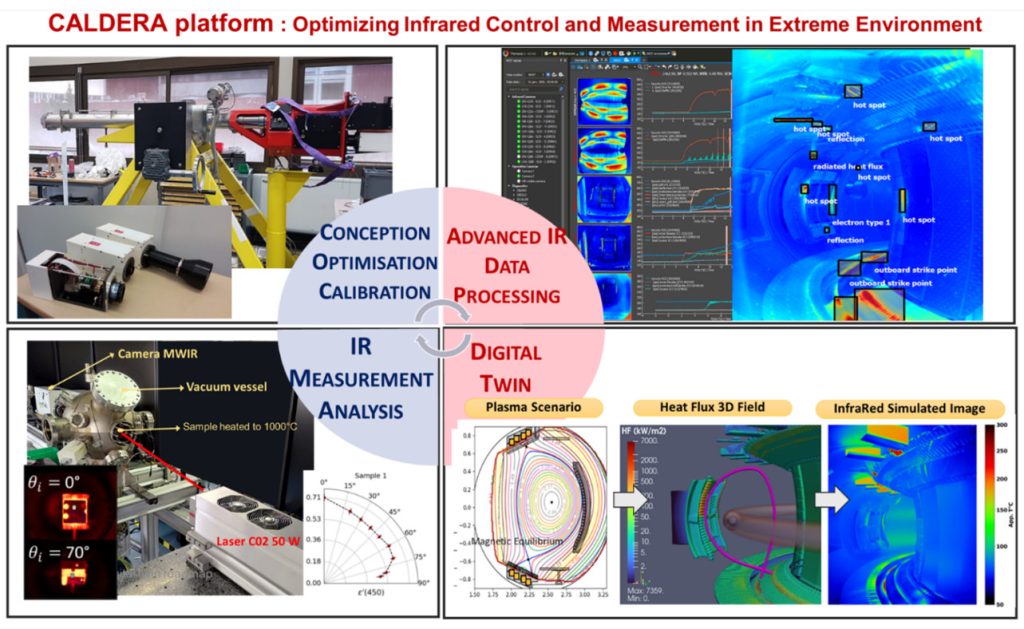
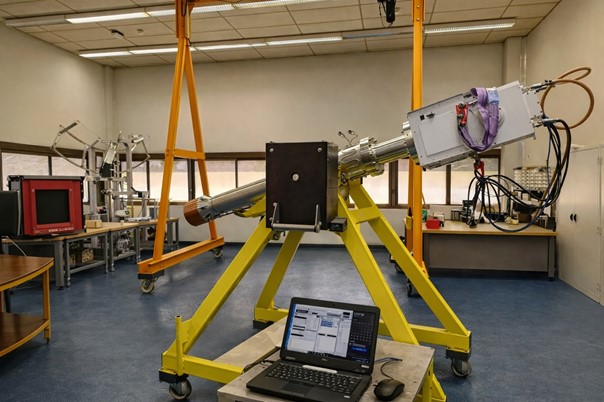
Figure 1: Endoscope undergoing laboratory testing. Here, the endoscope is aimed at a model of the machine’s floor (divertor) to verify the field of view
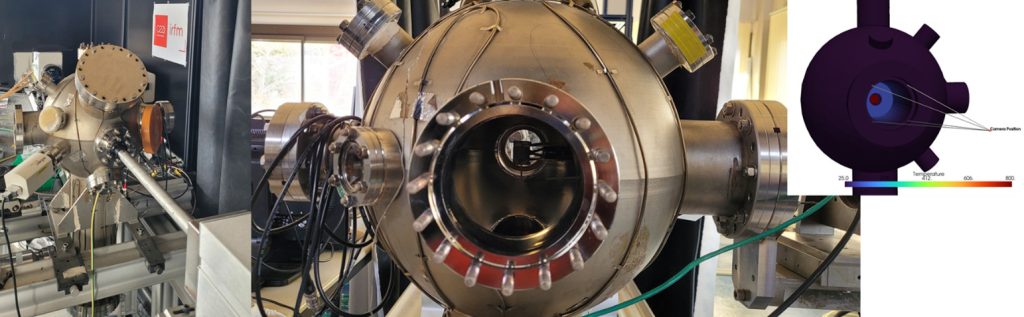
Figure 2: Laboratory test bench for characterizing materials under vacuum and at high temperatures and validating simulation codes.