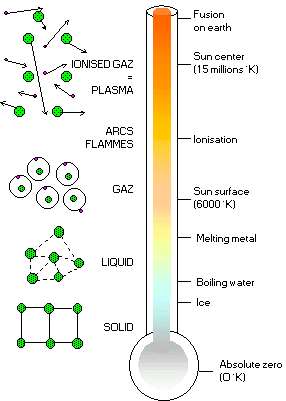
To obtain a fusion reaction, we must bring two nuclei sufficiently close together for them to repel each other, as they are both charged positively. A certain amount of energy is therefore vital to cross this barrier and arrive in the zone, extremely close to the nucleus, where there are the nuclear forces capable of getting the better of electrostatic repulsion. The probability of crossing this barrier may be quantified by the ” effective cross section”. The variation against interaction energy expressed in keV of effective cross sections of several fusion reactions is shown on the graph opposite.
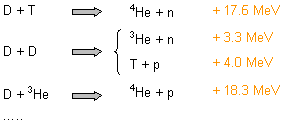
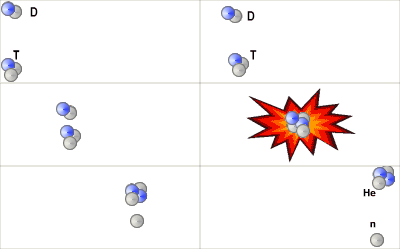
The most accessible fusion reaction is the reaction involving deuterium and tritium. It is on this reaction that research on controlled fusion is conducted.