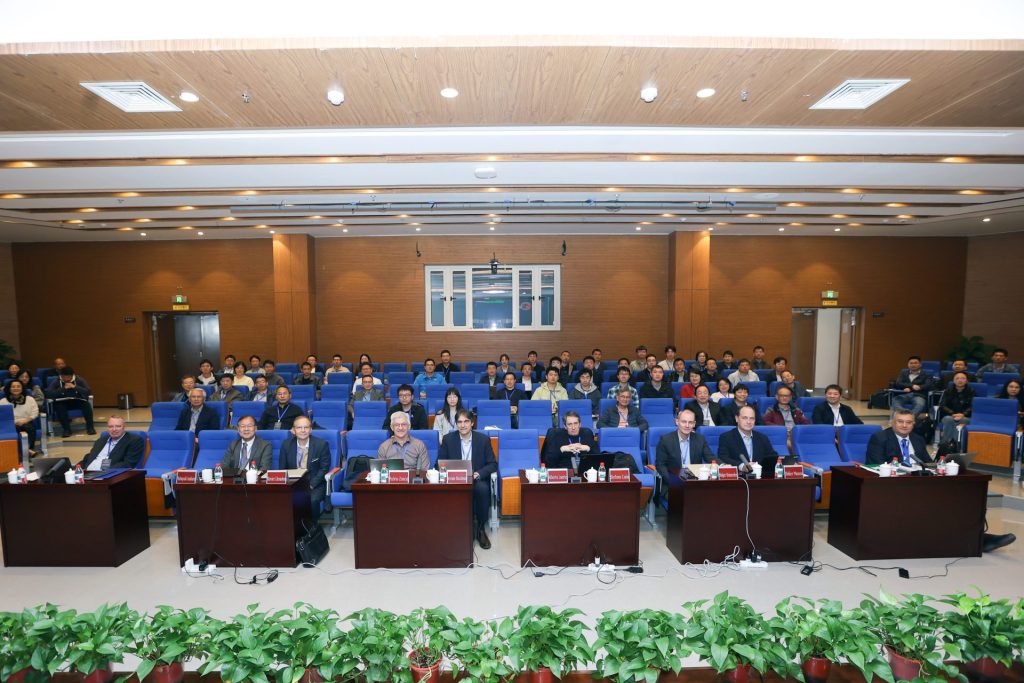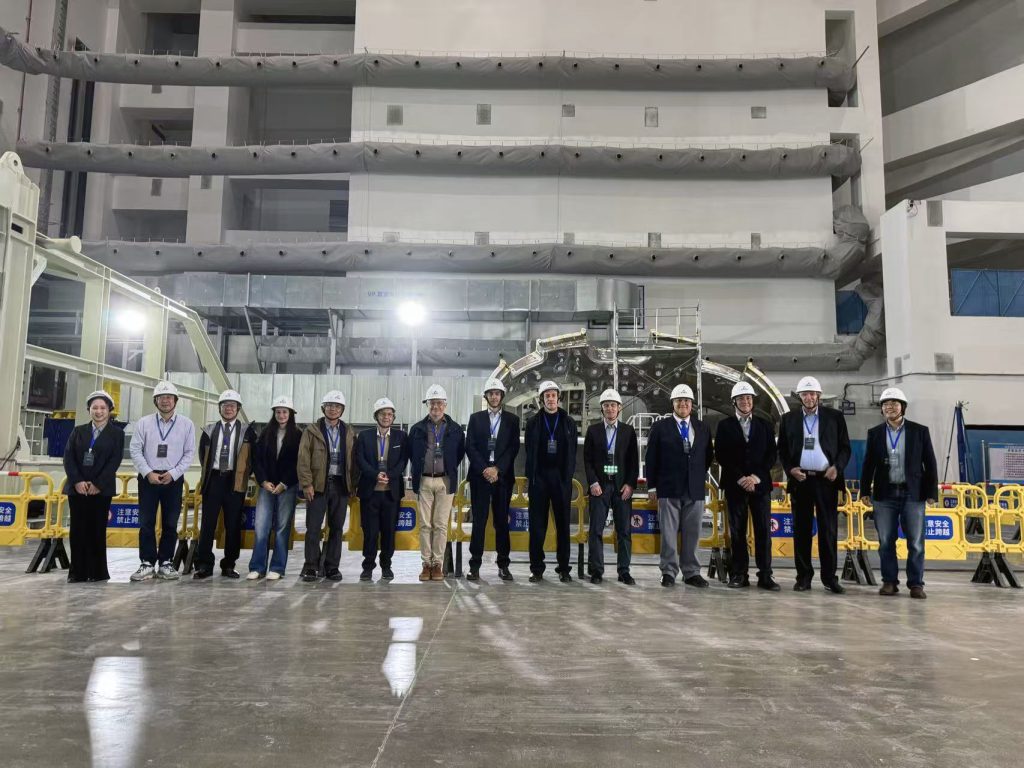
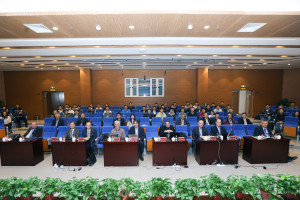
The second meeting of the International Advisory Committee on the Physical Design of the China Fusion Engineering Demo Reactor (CFEDR) was held from April 14 to 16, 2026, in Hefei, China. Among the 11 invited international experts* were Jérôme Bucalossi, Xavier Litaudon, and Didier Mazon.
The committee was convinced that the updated CFEDR design and the revised H-mode reference scenario with pulsed operation represent a credible and technically coherent path toward a fusion power plant capable of delivering net electrical power. The size of the CFEDR (major radius of 8 m, minor radius of 2.7 m), the plasma current (20 MA), and the toroidal field (6 T) are compatible with achieving a target fusion power > 2.5 GW, using the same methodology as that applied to the ITER design and the evaluation of fusion performance.
The previous version of the CFEDR design was previously the subject of a special issue of “Plasma Science & Technology” 2025, Vol. 27, No. 10
https://pubs-en.cstam.org.cn/pst/article/2025/10
CFEDR’s mission is to achieve a fusion power of 1.5 to 3 GW, with a high fusion gain (Q = 15–30), net electricity production (>200 MWe), steady-state operation (“duty cycle > 0.5), as well as tritium self-sufficiency and the development of tritium cycle technologies.
Participants were very impressed by the progress and maturity of the CFEDR design, noting the significant increase in the depth and breadth of developments in physics and engineering. During the meeting, approximately 20 presentations were made to the committee, and a session featuring 40 posters facilitated more in-depth discussions with the CFEDR team.
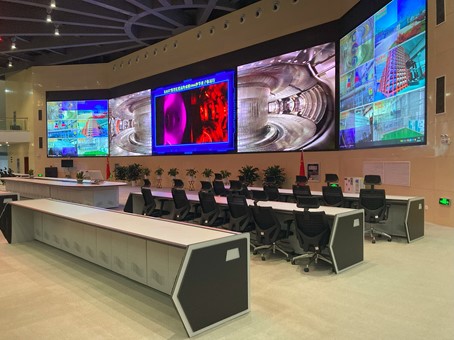
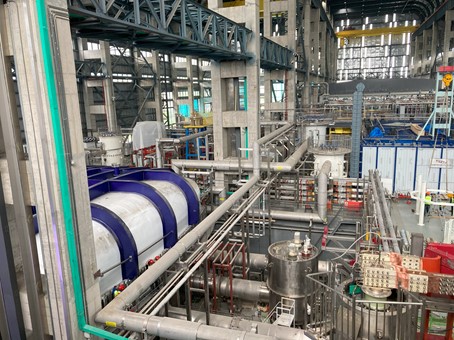
The international experts had the privilege of visiting the Comprehensive Research Facilities for Fusion Technology (CRAFT), which highlighted significant advances in key technologies—such as superconducting magnets, divertor technology, and heating systems—for the benefit of CFEDR and the BEST tokamak project (scheduled to come online in late 2027).
CRAFT is making rapid progress in research and development and is providing essential technologies for the construction of future fusion devices.
* The committee brought together 11 international experts from ITER-IO (1), Germany (2), France (3), the United Kingdom (1), Switzerland (3), and Japan (1).